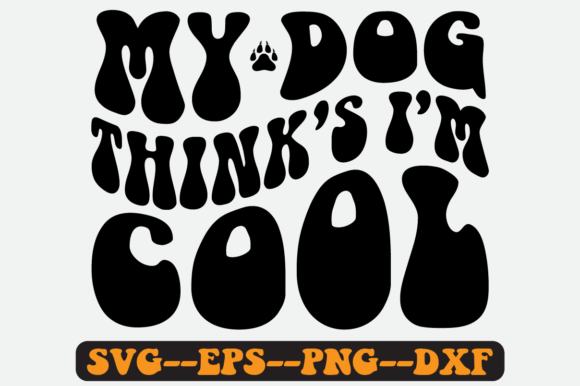
Reviewing the My Dog Thinks I’m Cool Retro SVG for Embroidery
As a designer who spends half my life digitizing files and the other half stitching them out, I have learned that not every cute graphic translates well to thread. When I first pulled up the My Dog Think s I m Cool Quote Retro Svg, my initial reaction was one of cautious optimism. The retro aesthetic is undeniably trendy right now, especially in the pet niche, but trends can be tricky when you move from screen to fabric. This isn’t just about whether the design looks good on a monitor; it is about how it holds up under the needle, how it feels to the touch, and whether it will survive a wash cycle without puckering or breaking.
First Impressions and Visual Personality
The mood of this design is playful and nostalgic. It taps into that specific "dog mom" energy that dominates social media and boutique shops alike. Visually, the layout relies heavily on typography, which is always a double-edged sword in embroidery. Text-heavy designs require precise digitizing to ensure legibility, especially when scaled down. The retro styling suggests curved lines and perhaps some distressed or textured elements, which can look fantastic if handled with the right stitch types but disastrous if the density is too high.
For those of us working in Crafts and digital Graphics, we know that a PNG or SVG intended for sublimation or printing behaves differently than a machine-ready file. Since this product is described as a printable design for items like t-shirts and hoodies, using it for embroidery requires an extra layer of scrutiny. You are essentially translating a print concept into a tactile medium. The charm lies in its simplicity, but the challenge lies in execution.
Real-World Application: The Sweatshirt Test
To truly evaluate this asset, I imagined a real-life scenario: a custom order for a local boutique client who wanted personalized sweatshirts for a dog walking group. The My Dog Think s I m Cool Quote Retro Svg seemed like a perfect fit for the back of a crewneck sweatshirt. In this context, the size works in your favor. A larger hoop allows the lettering to breathe, reducing the risk of thread breaks and ensuring the retro font remains crisp.
However, if you are an Etsy seller or small shop owner looking to use this for smaller items, you need to be strategic. Imagine placing this on a tote bag. The fabric texture of canvas is forgiving, but the weave can interfere with small details. If the design includes fine lines or tight curves typical of retro fonts, you must check the stitch density. High density on a flexible fabric like a tote handle can cause distortion. I would recommend testing this on a scrap piece of similar weight fabric before committing to the final finished product.
Navigating Fabric and Hoop Constraints
One of the most critical aspects of using any quote-based design is understanding where it should not go. While the description mentions onesies and baby clothes, I would approach these applications with extreme caution. Baby skin is sensitive, and the back of embroidery stitches can be scratchy. If you choose to embroider this on a onesie, consider using a soft backing or switching to an applique design method if the file structure allows, though this specific SVG may require manual digitizing for that effect.
Curved surfaces like caps present another hurdle. The retro font likely has varying widths. On a structured cap, the center front panel is stable, but if the text is long, it might wrap around the curve awkwardly. Always mock up the design in black and white first to see the silhouette. If the letters blend together when shrunk, the design is too complex for that hoop size. For embroidered patch creation, however, this design could shine. Patches allow for higher stitch density and stabilizer support, making them ideal for intricate retro typography.
Stitch Quality and Technical Considerations
Since this is provided as a graphic file rather than a pre-digitized machine embroidery design, the responsibility falls on you to convert it properly or trace it carefully. If you are digitizing this yourself, pay close attention to the satin stitch width. Retro fonts often have thick strokes; if these exceed 7mm, you will need to add underlay or split the columns to prevent snagging. For thinner parts, a running stitch or narrow satin might be appropriate, but ensure it doesn’t get lost in the fabric pile.
Thread color choice plays a massive role here. A retro vibe often calls for muted tones or high-contrast vintage palettes. Test your thread colors against both light and dark fabrics. A design that pops on white cotton might vanish on heather grey fleece. Also, consider the stabilizer. For stretchy fabrics like hoodie material, a cut-away stabilizer is non-negotiable to maintain shape after washing. For woven towels or aprons, a tear-away might suffice, but always test for residue.
Commercial Viability and Brand Consistency
For commercial embroidery projects, consistency is key. If you are building a brand around pet lovers, this design fits the narrative perfectly. It adds personality to custom apparel and enhances the perceived value of a personalized gift. Customers are drawn to items that feel handmade and unique. However, professionalism matters. Sloppy stitching due to poor digitizing will hurt your reputation faster than a generic design ever could.
Before listing this as a small shop product, verify the licensing terms. Just because it is a printable SVG does not automatically grant rights for commercial embroidery sales. Many designers separate print licenses from embroidery licenses. Ensure you have the right to sell physical items made with this design. If you are creating digital embroidery file derivatives, that is a different legal ballpark entirely. Always read the fine print to protect your craft business.
Final Verdict for Makers
The My Dog Think s I m Cool Quote Retro Svg is a strong candidate for mid-to-large scale embroidery projects where text legibility is preserved. It excels in environments like sweatshirts, tote bags, and pillow covers where the fabric provides a stable canvas. It struggles in tiny hoops or on highly textured, stretchy materials unless meticulously stabilized and digitized.
My advice? Treat this as a starting point. Use it to inspire your embroidery project, but do not rely on it as a plug-and-play solution without testing. Create a printable mockup to visualize placement, stitch out a sample on scrap fabric, and adjust your tension and density accordingly. When done right, this design can elevate your design assets portfolio and delight customers who want to show off their furry friends in style. Keep your needles sharp, your stabilizers ready, and your eye on the details.